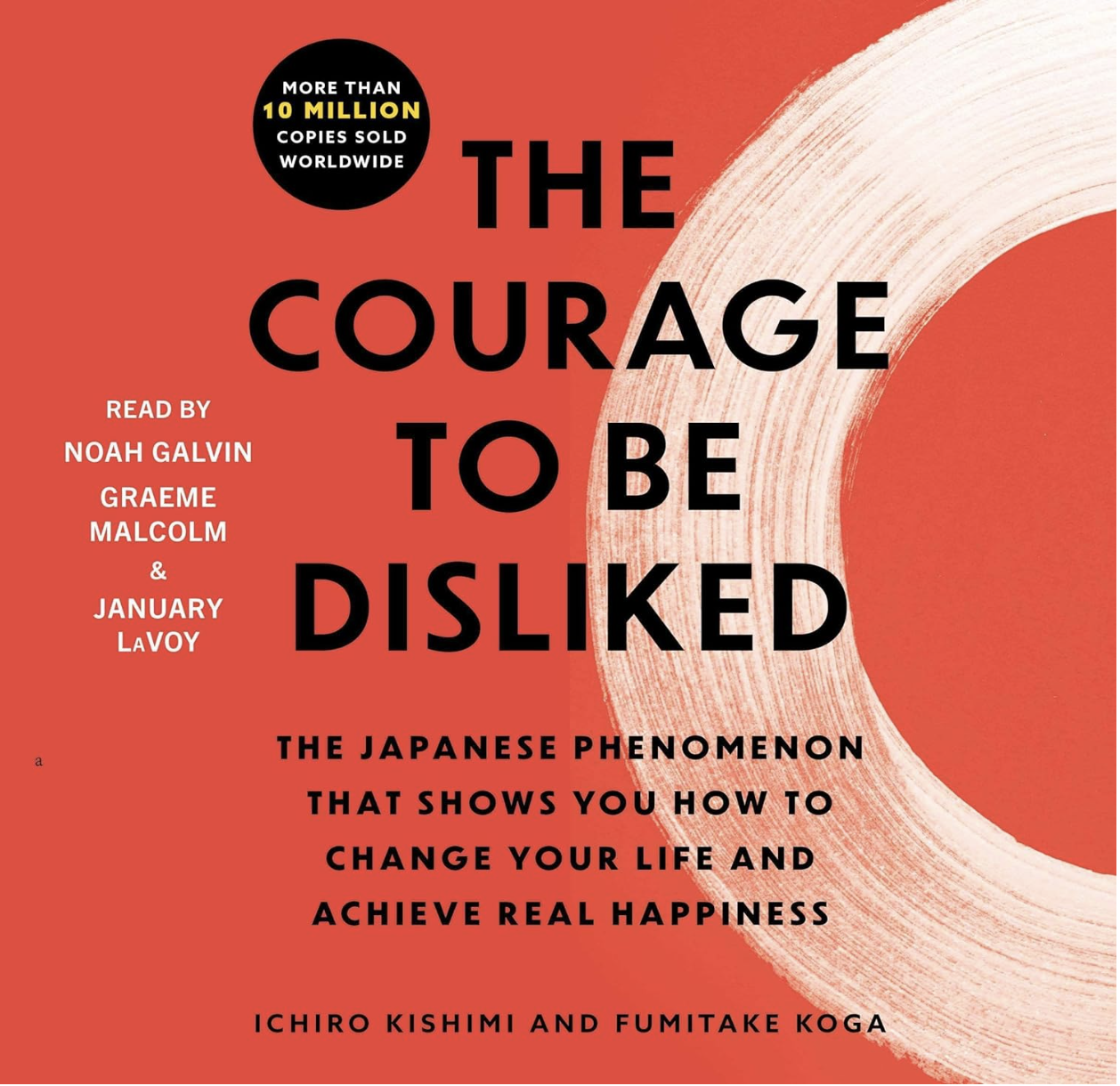

The “Courage to Be Disliked“ by Ichiro Kishimi and Fumitake Koga is a dialogue between a philosopher and a young man. They discuss the principles of Alfred Adler’s psychology.
One of the things I love about the book is its views on happiness, interpersonal relationships, and the pursuit of meaning.
This blog post will be the first part of 6 key concepts in the book. Happiness is a choice.
Key concepts
- Happiness is a choice
- Identifying your task and what is not your task
- All problems are interpersonal relationships
- People’s behaviour and mindsets are based on their goals
- Living in the moment
- Courage to prioritise your values over being liked
We will discuss these basic concepts in upcoming blog posts, so stay tuned and keep your eyes out for new updates.
Happiness is a Choice
The idea that “happiness is a choice” is rooted in the belief that individuals have control over how they perceive and respond to their circumstances.
The book argues that happiness isn’t something that happens to you based on external events, but rather, it’s a decision you actively make. You choose to be a happy.
You have power over your thoughts, emotions and reactions. Your thoughts, emotions and reactions are not determined by external forces like friends, colleagues, family or negative situations.
By choosing how you interpret situations, you can influence your own happiness.
For example, getting a B in a test shouldn’t make you too much upset to the extent that it influences your emotions or reactions. Rather, see the B as a motivation to work harder for a better grade.
Choosing happiness means living in alignment with your own values and goals, rather than constantly seeking approval or trying to meet others’ expectations. When you prioritize what genuinely matters to you, it becomes easier to find contentment, as your sense of worth and joy is based on your own choices, not others’ judgments.
According to Adlerian psychology, many people struggle with feelings of inferiority because they compare themselves to others.
Happiness can be achieved by choosing to accept yourself as you are, focusing on your strengths, and setting your own benchmarks for success rather than relying on comparisons.
The authors argue that people often use their circumstances or emotions as excuses to avoid making changes or facing fears. For example, someone might say,
“I can’t be happy because of my past experiences.”
However, Adler’s perspective is that this person has chosen to let the past determine their present.
Instead, by setting positive, meaningful goals and pursuing them, one can decide to prioritize happiness over dwelling on past grievances or perceived limitations.
Choosing happiness also involves embracing imperfection—in oneself, in others, and in life. The book encourages acknowledging that it’s okay not to have everything figured out and that life is inherently filled with ups and downs. By accepting these imperfections, you reduce the stress associated with striving for unrealistic standards and open up more room for genuine happiness.
Happiness isn’t about eliminating problems or achieving certain milestones, but about how you approach life’s challenges.
By choosing to see difficulties as opportunities for growth or opting to focus on the present rather than dwelling on the past, you take an active role in shaping your happiness.

How to Focus on your Strength
- Reflect on past successes
- Use your strengths to achieve your goals
- Apply your strengths in different ways
- Practise and improve your strongest skill
- Outsource tasks that don’t align with your strengths
What are some Benchmarks for Success
- Mastering a skill
- Forming a good habits
- Promotion or salary increase
- Networking growth
- Recognition and awards
- Investment goals
- Fitness goals
- Consistency
- Quality time with family
- Emotional stability
- Community involvement
Things to do to Prioritize Your Happiness
- Set boundaries
- Practise self-care (exercise, journaling, prayer)
- Connect with people that uplift your spirit
- Disconnect from toxic relationships
- Try out new hobbies
- Spend time in nature
- Declutter
- Practise gratitude
- Unplug from social media
- Volunteer
- Practise random acts of kindness
- Stay open to new experiences
If you would like to read the book, click here
Did you learn something new from this post? If yes, please share it in the comment section.


