The Parkinson’s Pandemic: What You Need to Know and How You Can Help

Featured

Living with Parkinson’s can feel like navigating a labyrinth, with twists and turns at every corner. But fear not – we’re here to illuminate some lesser-known paths that might lead to brighter days ahead. So, settle in, take a deep breath, and let’s embark on this exploration together, with hope as our compass and resilience as our guide. Let’s journey hand in hand, knowing that we’re in this together.

It’s crucial to grasp the intricacies of Parkinson’s symptoms – those daily companions that can often feel like unwelcome guests. From the frustrating tremors to the stiffness that seems to have taken up residence in your limbs, each symptom carries its weight, impacting your life in ways only you truly understand. But know this: you’re not alone in this struggle. By delving into the nuances of these symptoms, we’re not just facing them head-on but also arming ourselves with the knowledge needed to navigate this journey with greater resilience and understanding. So, let’s take a closer look at these symptoms, unraveling their complexities together and forging a path forward anchored in empathy, expertise, and unwavering support.

Click here to learn how to slow the progression of Parkinson and live a happier life despite the diagnosis

The power of lifestyle changes

Picture this: amidst the chaos of managing your condition, there lies a realm of possibility – minor shifts in your daily habits that could yield remarkable results in easing your symptoms. From the gentle sway of tai chi to the nourishing embrace of a well-balanced diet, these lifestyle changes 

In our journey toward understanding and embracing lifestyle changes for Parkinson’s management, stories have immense power – tales of resilience, triumph, and the human spirit’s unyielding resolve. These narratives paint a vivid picture of possibility, showing us that beyond the pages of medical journals and clinical studies, a tapestry of lived experiences exists, each thread weaving a story of hope and healing.

Imagine sitting down with individuals who have walked the path you now tread – individuals whose journeys have been marked by moments of doubt, fear, and uncertainty yet who have emerged stronger, wiser, and more resilient than ever. These voices guide us, illuminating the way forward with their wisdom, courage, and unwavering determination.

So, let’s lean in and listen closely to these stories – stories of ordinary people facing extraordinary challenges, setbacks transformed into stepping stones, and dreams realized against all odds. Through their experiences, we gain insight and inspiration – a beacon of light illuminating our path and reminding us that, in the face of adversity, hope springs eternal. 

Click here to learn how to avoid the vicious cycle of health threats in Parkinson’s and brain degeneration.

Sarah

Sarah was diagnosed with Parkinson’s disease at the age of 52. At first, she felt overwhelmed and uncertain about her future. However, instead of resigning herself to the limitations of her diagnosis, Sarah decided to take proactive steps to improve her quality of life. She began incorporating regular exercise into her routine, starting with gentle yoga and walking. Over time, she noticed a significant improvement in her mobility and flexibility, as well as a reduction in her tremors. Inspired by her progress, Sarah also changed her diet, focusing on whole, nutrient-rich foods and cutting back on processed snacks and sugary treats. Today, Sarah feels more robust, energetic, and empowered than ever. She credits her commitment to lifestyle changes for helping her manage her Parkinson’s symptoms with grace and resilience.

John

John was diagnosed with Parkinson’s disease at the age of 60. As an avid golfer, he was devastated by the thought of losing his ability to enjoy his favorite pastime. Determined to stay active and maintain his independence, John decided to explore alternative therapies to complement his medication regimen. He discovered the benefits of tai chi, a gentle form of martial arts that emphasizes slow, flowing movements and mindfulness. After incorporating tai chi into his daily routine, John noticed a remarkable improvement in his balance, coordination, and overall well-being. He also found solace in the supportive community of fellow tai chi practitioners, who provided encouragement and camaraderie along his journey. Today, John continues to enjoy playing golf and living life to the fullest, thanks to the positive impact of lifestyle changes on his Parkinson’s symptoms.

Emily

Emily was diagnosed with Parkinson’s disease at the age of 48. As a busy mother of three young children, she struggled to balance the demands of her family life with the challenges of her diagnosis. Determined to prioritize her health and well-being, Emily made self-care a non-negotiable part of her daily routine. She started practicing mindfulness meditation to reduce stress and anxiety, carving out a few minutes each day to quiet her mind and focus on the present moment. Emily also made time for regular social activities, such as book club meetings and coffee dates with friends, to combat feelings of isolation and loneliness. Through these lifestyle changes, Emily discovered a newfound sense of peace, resilience, and joy, even in adversity. Today, she inspires others living with Parkinson’s, proving that with determination and self-care, it’s possible to thrive despite the challenges life throws our way.

Practical Tips for Implementing Lifestyle Changes

As we embark on the journey of incorporating lifestyle changes into our Parkinson’s management plan, it’s essential to equip ourselves with practical strategies and actionable steps. Think of it as charting a course on a voyage – with each step carefully planned and executed, we inch closer to our destination of improved well-being and symptom relief.

First and foremost, let’s set the stage for success by establishing realistic goals and expectations. It’s essential to recognize that change takes time and patience, and embracing a compassionate approach toward yourself is critical to long-term success. Start small, celebrate each milestone along the way, and remember that every step forward, no matter how small, is a victory worth honoring.

Next, craft a personalized plan tailored to your unique needs, preferences, and circumstances. What works for one person may not necessarily work for another, so it’s crucial to listen to your body, trust your instincts, and adjust as needed. Whether incorporating daily exercise routines, revamping your diet, or prioritizing stress-reduction techniques, your plan should reflect your journey toward more excellent health and vitality.

Lastly, let’s lean on the support of your healthcare team, caregivers, and loved ones as you navigate this terrain. They are your allies, advocates, and partners in this journey, offering guidance, encouragement, and unwavering support at every step. Feel free to reach out for help when needed, and remember that you’re always with others on this path.

Nutrition

When it comes to managing Parkinson’s disease through nutrition, understanding the impact of different foods on symptoms is essential. While there isn’t a one-size-fits-all approach, confident dietary choices may exacerbate symptoms, while others have been shown to alleviate them.

Working with a healthcare provider or registered dietitian is essential to develop a personalized nutrition plan that meets your unique needs and preferences. Individuals can optimize their nutrition to manage their symptoms and improve their overall quality of life by focusing on nutrient-dense, whole foods and minimizing processed and sugary items.

Foods that may worsen symptoms

High-sugar foods and beverages: Excessive sugar intake can lead to fluctuations in blood sugar levels, potentially exacerbating symptoms such as fatigue and tremors.

Processed foods: Foods high in processed ingredients, additives, and preservatives may contribute to inflammation in the body, worsening symptoms of Parkinson’s.

High-fat foods: Consuming a diet high in saturated and trans fats has been linked to an increased risk of cardiovascular disease, which can indirectly impact Parkinson’s symptoms by affecting blood flow to the brain.

Foods that may alleviate symptoms

Antioxidant-rich foods: Fruits and vegetables such as berries, spinach, kale, and bell peppers are packed with antioxidants that help combat oxidative stress and inflammation in the body, potentially reducing symptoms of Parkinson’s.

Omega-3 fatty acids: Foods rich in omega-3 fatty acids, such as fatty fish (salmon, mackerel, sardines), flaxseeds, and walnuts, have anti-inflammatory properties that may help alleviate symptoms and support brain health.

Whole grains: Choosing whole grains such as brown rice, quinoa, oats, and whole wheat bread over refined grains can provide steady energy levels and support overall health, which may positively impact Parkinson’s symptoms.

Navigating Challenges and Celebrating Progress

As we journey through the realm of lifestyle changes for Parkinson’s management, it’s essential to acknowledge that challenges may arise along the way. But here’s the thing: setbacks are not roadblocks; they’re detours that offer valuable lessons and opportunities for growth.

When faced with obstacles, it’s essential to approach them with patience, resilience, and a healthy dose of self-compassion. Remember, your struggles do not define you – you’re limited by how you rise above them. So, take a deep breath, gather your strength, and press on, knowing that each challenge conquered brings you one step closer to your goals.

And let’s remember to celebrate the wins, no matter how small. Whether mastering a new yoga pose, preparing a nutritious meal from scratch, or getting a good night’s sleep, every achievement is cause for celebration. So, take a moment to bask in the glow of your successes, acknowledging the hard work and dedication that brought you to this point.

Sleep

Ensuring restful sleep is vital for individuals managing Parkinson’s disease, yet sleep disturbances are common and can significantly impact overall well-being. Employing strategies to improve sleep hygiene and address these disturbances is critical to promoting better sleep quality and quality of life.

Establish a consistent sleep schedule

Aiming to go to bed and wake up simultaneously every day, even on weekends. This consistency helps regulate the body’s internal clock, promoting better sleep quality and a more stable sleep-wake cycle.

Create a relaxing bedtime

Creating a relaxing bedtime routine can signal the body that it’s time to wind down and prepare for sleep. Activities such as reading, taking a warm bath, or practicing relaxation techniques like deep breathing or meditation can promote relaxation and ease the transition to sleep.

Limiting stimulants and screen time before bed

Avoiding stimulants such as caffeine and nicotine in the hours leading up to bedtime can prevent interference with sleep quality. Additionally, reducing exposure to blue light from electronic devices like smartphones and computers can help regulate the body’s natural sleep-wake cycle.

Manage stress and anxiety

Stress and anxiety can significantly impact sleep quality, so relaxation techniques like mindfulness meditation, progressive muscle relaxation, or journaling can help reduce stress levels and promote a more peaceful state of mind before bedtime.

Finally, seeking medical evaluation and treatment is essential if sleep disturbances persist despite implementing these strategies. Medical professionals can assess for underlying issues contributing to poor sleep quality and recommend appropriate interventions, such as medication adjustments or treatments targeting specific sleep disorders.

You can click here to learn how to slow the progression of Parkinson disease.

By implementing these strategies and prioritizing sleep hygiene, individuals with Parkinson’s disease can take proactive steps to improve sleep quality and enhance their overall quality of life.

In conclusion

Navigating life with Parkinson’s disease presents its unique set of challenges, yet it also offers opportunities for growth, resilience, and newfound vitality. By embracing lifestyle changes tailored to individual needs and preferences, individuals with Parkinson’s can take proactive steps to manage symptoms, improve overall well-being, and enhance quality of life.

From prioritizing regular exercise and nourishing the body with nutrient-rich foods to cultivating relaxation techniques and seeking support from healthcare professionals and loved ones, the journey toward optimal health is multifaceted and deeply personal. By honoring the body’s innate wisdom and resilience, individuals can harness the power of lifestyle changes to navigate the complexities of Parkinson’s disease with grace and determination.

Our diagnosis does not define us, but rather by the courage, resilience, and unwavering spirit with which we face each day. By supporting one another, sharing our stories, and embracing the journey with open hearts and minds, we can find strength, inspiration, and hope in the face of adversity.

Ready to take the next step towards optimizing your health and well-being on your Parkinson’s journey? Explore the resources and products recommended in this article to support your lifestyle changes and enhance your quality of life. Click here to discover solutions tailored to your needs, and start your journey towards a brighter, healthier tomorrow today.

Did you find this article helpful? Please subscribe to my blog and leave a comment below. You can also find us on Instagram (mabs_blog) and on the X app (MadameAnn4).

Featured

Are you sleeping through you alarm?

Have you ever felt irresponsible because you overslept? You couldn’t hear your alarms, even when you set them about 30 minutes apart. I promise I have been there too.

Have you figured out a way to subconsciously switch off your alarm when you are asleep, and now you feel at war with your alarm clocks? This is me on most days until I find a solution. Keep reading; I will share the secret of winning the war against the alarm clock.

The first thing is to discover why you are oversleeping and not hearing your alarms. Here are some common reasons

A lady oversleeping

1. You are not getting enough sleep

We each have our own biological sleep needs. It is the amount of sleep you need to wake up feeling refreshed and able to go about your day. It can be 7-9 hours, but if you are in medical school or on a tight schedule at work, you are lucky to get 5.

When you don’t get the sleep your body needs each night, you start to rack up sleep debt. If you are in a chronic state of sleep deprivation, then you might have sleep deprivation and a higher sleep drive, and you are probably not going to hear your alarms when they ring. 

2. You go to bed at the wrong time

Are you a morning person or a night owl? You need to figure that out so you schedule your sleep well. I am an early waker, so I must sleep early to wake up early. If you are a night owl, you need to find a way to adjust your sleep schedule to fit your activity time. 

3. You are spending too much time on social media

After a long day, you might want to reward yourself a little by scrolling through a few posts on social media, but unfortunately, you get trapped and find yourself mindlessly scrolling. Before you know it, it’s 1 am, but you must be up by 5 am. So you set up multiple alarms to wake you at 5 am or at least 5:30. But sadly, you couldn’t hear the alarm, and now it’s 8 am. Sounds familiar? Hehehe 

Now let’s discuss how to avoid sleeping through your alarms

1. Have a routine

Having a routine means going to bed at the same time and waking up at the same time every day. If having a routine is something plausible for you, try to work out a routine that benefits you.

For many who cannot work a routine out, the next best thing is sleeping the same hours daily. 

2. Dont press the snooze button

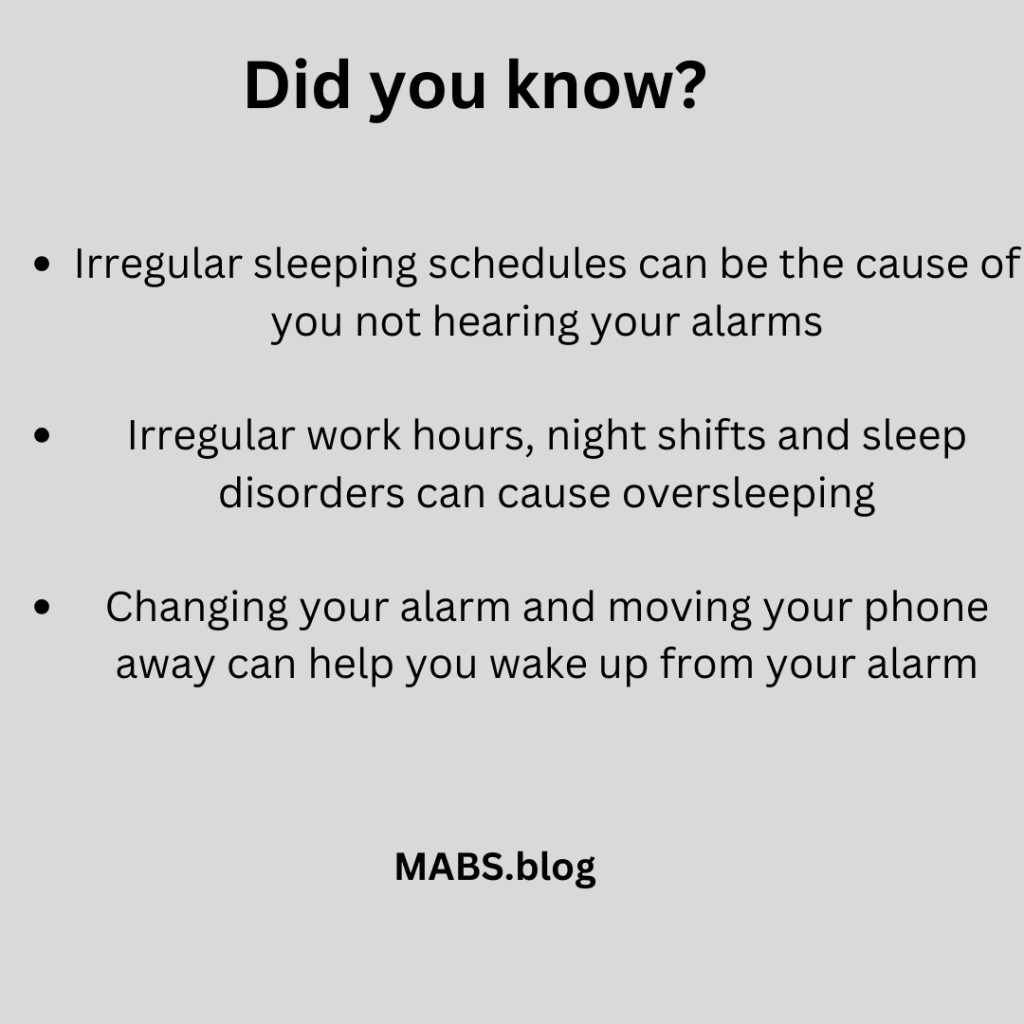
I have the magical power of switching off my alarm while asleep. For some people, they are in an infinite cycle of snoozing. Just keep your phone far from you before sleep, and let your alarm ring enough to annoy you out of bed. Then, grudgingly, make yourself a coffee or switch on the lights. 

3. Have good sleep hygiene

Sleep hygiene is a habit you develop to ensure you have quality sleep. Try reading a book before bed, eating a balanced meal, and exercising regularly. 

I remember how much my sleep improved once I started going to my gym. I could initiate sleep quickly and had a better motivation for waking up in the morning.

Speaking of motivation, you need to be motivated to wake up in the morning. Are you trying to wake up to study for a test or want more functional hours in your day? Find a way to be motivated to wake up. A cup of coffee, yummy leftovers, or a sweet conversation with your partner

4. Change your alarm tone

Having the same alarm for years can desensitize you from hearing it ring. So, changing the tone helps a lot. Furthermore, don’t set your alarm as your favorite song. Trust me, you will sleep through it or even dance to it in your dreams, haha.

Keep your alarm or phone a little distance from you; that way, you need to physically get up to stop it from ringing. 

5. Light 

Do not underestimate the power of light in waking you up; it works. Light from your phone or the lights in the bathroom work well, but you could also invest in light therapy alarm clocks  

In conclusion

Don’t beat yourself up for sleeping through your alarm. There are many solutions:

  • Have a sleep routine and good sleep hygiene.
  • Change your alarm clock.
  • Be motivated to wake up and use light to your advantage.

I hope you found this article helpful. Leave a comment below; I would like your feedback after trying these methods to ensure you wake up on time.

Depression in Older Adults: Aging and Emotional Health

It’s normal to feel sad sometimes. But if your sadness lasts two weeks or longer and affects your ability to handle daily life, it could be depression.

According to the National Institute on Aging (NIA), depression is not a normal part of getting older—and the good news is, it’s treatable at any age.

Erik Erikson’s Integrity vs. Despair

Psychologist Erik Erikson described eight stages of life. The final stage, Integrity vs. Despair, occurs from around age 65 until death. During this stage, older adults look back on their lives and reflect on what they’ve done, who they’ve loved, and what they’ve achieved.

Integrity

Integrity is a sense of peace and satisfaction with one’s life journey.

  • Characteristics: Gratitude, acceptance of mistakes, and appreciation for meaningful accomplishments.

  • Outcome: A sense of wholeness and the ability to face death calmly, with wisdom.

Despair

Feelings of bitterness and regret over missed opportunities.

  • Characteristics: Fear of death, hopelessness, and dissatisfaction with how life turned out.

  • Outcome: Emotional distress, which can deepen into depression if not addressed.

Reaching integrity can bring wisdom and peace, while despair can lead to sadness, regret, and isolation, making older adults more vulnerable to mental health challenges like depression.

Depression in Old Age

More than 1 in 10 older adults experience depression. Among those in residential care homes, the rate rises to over 3 in 10.

Yet, many cases go unnoticed because symptoms are often mistaken for “just getting old.”

Common Risk Factors

  • Chronic medical conditions (like heart disease or arthritis)

  • Family or personal history of depression

  • Stressful life events

  • Poor sleep or sleep disorders

  • Lack of exercise or physical activity

  • Social isolation or loneliness

  • Loss of a loved one

Warning Signs of Depression in Seniors

Depression may not always appear as sadness. Look out for:

  • Difficulty sleeping or sleeping too much

  • Fatigue or loss of energy

  • Weight loss or changes in appetite

  • Withdrawal from friends or activities

  • Neglecting personal care

  • Increased alcohol use

  • Talking about death or giving away possessions

If an older person is talking about death, changing their will, or isolating themselves, take it seriously. These may be signs of suicidal thoughts.

Need immediate help?
Call the 988 Suicide & Crisis Lifeline at 988 (available 24/7) or visit 988lifeline.org.
For TTY users, dial 711 then 988 or 800-799-4889.

How to Support an Older Adult Living with Depression

Depression can make people withdraw, but connection helps healing.
Here’s how you can support an older friend, neighbor, or family member:

  • Invite them for a walk, coffee, or shared activity

  • Encourage them to talk to their doctor, depression can be treated at any age

  • Listen without judgment

  • Help them stay connected through visits, calls, or social events

Loneliness is one of the biggest causes of depression in older adults. A simple chat or visit can make a world of difference.

Treatment Options for Depression in Older Adults

Treatments work, but patience is key. Antidepressants may take longer to show results in older adults, and therapy needs to be tailored for their unique needs.

Common Treatments

  • Antidepressant medications (6–8 weeks for full effect)

  • Cognitive Behavioral Therapy (CBT) to reframe negative thoughts

  • Exercise and social engagement to boost mood

  • Electroconvulsive Therapy (ECT) for severe or treatment-resistant cases

  • Music or art therapy to promote emotional release and joy

A combination of medical, social, and psychological support often provides the best outcome.

Protecting Mental and Emotional Health as You Age

It’s never too late to build habits that support emotional well-being.

Simple Ways to Prevent Depression

  • Stay physically active (even short walks help)

  • Get 7–9 hours of sleep per night

  • Keep in touch with family and friends

  • Eat nutritious meals

  • Engage in hobbies and community activities

  • Seek medical advice for any persistent low mood or sleep issues

Sleep and Mental Health in Older Adults

Sleep changes with age. Many older adults experience:

  • Lighter sleep and more awakenings

  • Earlier bedtimes and wake times

  • Difficulty falling or staying asleep

Why It Happens

  • A weakened circadian rhythm and reduced melatonin production

  • Chronic health issues like pain or breathing problems

  • Medications that disrupt sleep

  • Reduced activity and sunlight exposure

  • Depression and anxiety

How to Sleep Better

  • Go to bed and wake up at the same time daily

  • Keep your bedroom quiet, dark, and cool

  • Limit caffeine, alcohol, and nicotine

  • Exercise during the day, but not before bed

  • Avoid heavy meals and reduce liquids at night

  • If you can’t sleep after 30 minutes, get up and do something relaxing

  • Talk to your doctor about insomnia or medication side effects

Good sleep not only boosts mood but also helps memory, focus, and overall quality of life.

Conclusion

Aging comes with wisdom and experience, but also change and reflection.

When older adults struggle to find peace with their past or lose a sense of purpose, depression can quietly creep in.

By staying connected, seeking help early, and understanding the emotional journey of later life, older adults can rediscover hope, peace, and integrity and continue to live meaningfully.

If you found this helpful, share it to raise awareness about mental health in older adults.

12 Tips to Consider when Caring for Someone with Parkinson’s

couples holding hands

Caring for a loved one with Parkinson’s disease (PD) can be a deeply rewarding experience, but it also comes with challenges that test patience, resilience, and adaptability. Parkinson’s affects movement, mood, and cognition, and its symptoms can vary daily. For caregivers, understanding the disease and implementing practical strategies can make a huge difference for both the patient and themselves.

This guide covers everything you need to know to provide compassionate, safe, and effective care. But First lets take a look at Maria’s Journey

woman with Parkinson's disease walking down the road

What Maria Taught us about Caregiving

Maria was 32 when her father, Samuel, was diagnosed with Parkinson’s disease. At first, the tremors in his hands seemed minor—sometimes spilling a cup of coffee or dropping his keys. But over time, the stiffness in his legs and slowness in movement became more noticeable.

Maria worked full-time but decided to become her father’s primary caregiver. The first few months were overwhelming. She struggled to keep track of his medication schedule, worried constantly about him falling, and felt guilty when she needed a break. Samuel, proud and independent, sometimes resisted her help, which made communication tense.

Determined to make it work, Maria started educating herself about Parkinson’s. She learned about exercises that improved balance, adaptive tools to help her father dress and groom himself, and ways to manage constipation with a fiber-rich diet. She set up pill organizers and alarms to make sure medications were taken on time, and she rearranged the house to reduce tripping hazards.

Even with all her planning, the emotional toll was heavy. Maria realized she was experiencing caregiver stress—she felt exhausted and anxious. She turned to a local Parkinson’s support group and learned about respite care, giving herself a few hours each week to rest while a trained caregiver helped her father. She also built a “backup team” of cousins and neighbors who could step in when needed.

Months later, Maria noticed a change—not just in her father, who seemed more confident walking with his cane and less frustrated during meals, but in herself. She felt more prepared, less stressed, and more capable of providing compassionate care. She learned that caregiving isn’t just about doing tasks; it’s about patience, communication, and building a support system that works for both the caregiver and the loved one.

1. Be Honest with Each Other

Open communication is the foundation of caregiving. Discuss symptoms, daily struggles, and emotional experiences with your loved one. Parkinson’s can affect mood and cognition, which may lead to frustration or anxiety. Honest conversations help you understand their priorities, fears, and limitations, and allow them to participate in decisions about their care.

Tip: Schedule a weekly check-in to discuss how they’re feeling and what adjustments might be needed.

2. Educate Yourself

The more you know about Parkinson’s, the better you can anticipate challenges. Learn about:

  • Motor symptoms: tremors, rigidity, slow movements, and balance issues.

  • Non-motor symptoms: depression, anxiety, sleep disturbances, and cognitive changes.

  • Treatment options: medications, therapies, and lifestyle adjustments.

Tip: Join support groups or follow Parkinson’s organizations online for up-to-date resources and practical advice.

3. Attend Doctor’s Appointments

Accompany your loved one to appointments whenever possible. This ensures:

  • You fully understand the treatment plan.

  • You can monitor medication effectiveness and side effects.

  • You can report new symptoms your loved one may not notice.

Tip: Take notes during appointments or record questions in advance to make sure nothing is missed.

4. Stay on Top of Insurance

Parkinson’s care can involve medications, physical therapy, and specialized equipment. Keep track of:

  • Health insurance coverage

  • Prescription plans

  • Medical bills and reimbursements

Being proactive prevents last-minute stress and ensures uninterrupted care.

5. Be Flexible

Parkinson’s symptoms can fluctuate from day to day, or even hour to hour. Some days, tasks like walking or eating may be harder. Be ready to adjust routines, schedules, or expectations based on how your loved one feels.

Tip: Focus on what can be done rather than what can’t, celebrating small victories maintains morale.

6. Make Sure Medications Are Taken on Time

Medication timing is critical for managing Parkinson’s symptoms. Missed or delayed doses can lead to:

  • Increased tremors

  • Stiffness

  • Slowness in movement

Tip: Use pill organizers, alarms, or smartphone reminders. Keep a medication log to track doses and any side effects.

7. Use Tools to Make Grooming Easy

Parkinson’s can make fine motor tasks challenging. Adaptive tools can maintain independence and reduce frustration:

  • Electric toothbrushes and razors

  • Button hooks or zipper pulls for clothing

  • Long-handled grooming brushes

Tip: Encourage independence where possible, it boosts confidence and dignity.

8. Avoid Shoes with Rubber Soles

Shoes with rubber soles can create friction, making shuffling or walking unstable. Opt for:

  • Shoes with smooth, firm soles

  • Proper-fitting footwear to prevent trips and falls

  • Non-slip indoor slippers

Tip: Always keep walking paths clear and well-lit.

  1. Provide Fiber-Rich Foods to Prevent Constipation

Constipation is a common non-motor symptom of Parkinson’s. Include:

  • Fresh fruits and vegetables

  • Whole grains and legumes

  • Adequate water intake

Tip: Regular meals, hydration, and gentle exercise like walking or stretching can help digestive health.

10. Recognize Caregiver Stress, Strain, and Burnout

Caring for someone with Parkinson’s can be physically, emotionally, and mentally taxing. Common issues include:

  • Stress: Worry about your loved one’s health or daily tasks

  • Strain: Physical exhaustion from lifting, assisting, or household duties

  • Burnout: Feeling overwhelmed, irritable, or disconnected

Use tools like the Caregiver Stress Inventory to evaluate your wellbeing. Being proactive about your mental and physical health is just as important as caring for your loved one.

11. Build a Backup Team

You don’t have to manage everything alone. Build a network of:

  • Family members or friends

  • Professional caregivers or home aides

  • Community support groups

A reliable support system ensures consistent care, especially during emergencies or when you need a break.

  1. Consider Respite Care

Respite care provides temporary relief for caregivers. Options include:

  • In-home professional care for a few hours or days

  • Short-term stays in a care facility

  • Community programs or adult day care

Taking time for yourself helps prevent burnout, reduces stress, and allows you to recharge while ensuring your loved one is safe and cared for.

In conclusion

Caring for someone with Parkinson’s requires patience, flexibility, and preparation. By educating yourself, supporting medication adherence, ensuring safety, and taking care of your own wellbeing, you can provide compassionate, high-quality care.

Remember, you’re not alone. Building a support system, using adaptive tools, and seeking help when needed ensures both you and your loved one thrive despite the challenges of Parkinson’s disease.

Parkinson’s Symptoms: When to Worry and When It’s Normal

It’s normal to notice little changes in your body as you get older, your handwriting might shrink, your sleep may not feel as deep, or you might walk a little slower than you used to. But sometimes, these everyday changes overlap with early signs of Parkinson’s disease, a brain condition that affects movement and other functions.

So how do you know when it’s just aging or stress, and when it’s something worth bringing up with your doctor? Let’s break it down symptom by symptom.

Parkinson disease

Tremor

Tremors are a common concern. Many people experience mild shaking after stress, fatigue, or too much caffeine, and tremors that only appear when you’re using your hand are usually harmless. The tremors linked to Parkinson’s, however, are different, they tend to appear when the hand is resting, often starting on one side of the body, and they gradually become more noticeable over time.

  • When it’s normal: Stress, caffeine, or even fatigue can make your hands shake a little. Tremors that only show up when you’re using your hand (like holding a cup of coffee) are usually harmless.
  • When to worry: Tremors that happen when your hand is resting, start on one side of the body, or slowly get worse over time may be linked to Parkinson’s.

Small Handwriting

Handwriting can also reveal early warning signs. While arthritis, vision problems, or simply aging can make writing smaller, Parkinson’s may cause a condition called micrographia, where handwriting becomes progressively cramped and tiny.

  • When it’s normal: Aging, arthritis, or poor vision can make your writing smaller or a bit shaky.
  • When to worry: If your handwriting becomes progressively tiny and cramped (called micrographia), it could be an early sign of Parkinson’s.

Loss of Smell

  • When it’s normal: Allergies, sinus infections, or even a recent cold (including COVID-19) can block your sense of smell temporarily.
  • When to worry: A slow, unexplained loss of smell, especially when it doesn’t improve after the infection clears can be an early warning sign.

Trouble Sleeping

Trouble sleeping often seems harmless as well, since stress or a poor routine can keep you awake. The difference with Parkinson’s is when sleep problems include acting out dreams—such as kicking, punching, or talking in your sleep or having restless nights regularly.

  • When it’s normal: Stress, caffeine, or a poor bedtime routine can make it hard to sleep.
  • When to worry: If you’re acting out dreams (talking, kicking, punching in your sleep) or having restless nights regularly, it may be connected to Parkinson’s.

Trouble Walking

  • When it’s normal: Sore muscles, bad shoes, or fatigue can make walking awkward sometimes.
  • When to worry: Shuffling steps, dragging your feet, difficulty starting to walk, or reduced arm swing are more concerning.

Constipation

Constipation is common for many reasons, including diet and dehydration, but when it persists despite healthy habits, it may indicate a neurological cause. Similarly, dizziness and fainting can happen if you stand up too quickly or don’t drink enough water, but frequent unexplained episodes may be related to Parkinson’s effects on blood pressure.

  • When it’s normal: A low-fiber diet, dehydration, or travel can slow digestion.
  • When to worry: Ongoing constipation that doesn’t improve with lifestyle changes, especially if paired with other symptoms, may be a Parkinson’s sign.

Dizziness and Fainting

  • When it’s normal: Standing up too quickly, skipping meals, or not drinking enough water can make you lightheaded.
  • When to worry: Frequent dizziness or fainting without clear cause can be linked to blood pressure changes seen in Parkinson’s.

Soft or Low Voice

  • When it’s normal: A sore throat, fatigue, or talking too much can make your voice softer.
  • When to worry: If your voice becomes consistently softer, hoarse, or monotone, it may be related to Parkinson’s.

Stooping or Masked Face

  • When it’s normal: Sitting at a desk for long hours or weak back muscles can cause posture issues.
  • When to worry: A persistent stooped posture or a face that looks blank, with less blinking and fewer expressions, are red flags.

Mood and Motivation Changes

Mood and motivation can also shift. Stressful life events can cause low mood or lack of energy, but depression and apathy that last for months, especially without clear cause, may be part of Parkinson’s. Even erectile dysfunction, which can stem from age, stress, or other health conditions, may be related when it occurs alongside these other changes.

  • Depression & apathy
    • Normal: Stressful life events can affect your mood or energy.
    • Worry: Long-term low mood, loss of interest, or withdrawal from activities without a clear reason.
  • Erectile dysfunction
    • Normal: Common with age, stress, or medical conditions like diabetes.
    • Worry: Persistent problems alongside other Parkinson’s signs may be linked.

How Is Parkinson’s Diagnosed?

Parkinson’s is not diagnosed through a single test. Instead, doctors rely on a detailed medical history, a neurological exam that looks at movement, balance, reflexes, and handwriting, and sometimes a trial of Parkinson’s medication, if symptoms improve, that supports the diagnosis. Imaging like a DaTscan or MRI may be used to rule out other conditions but isn’t always necessary. A neurologist, especially one specializing in movement disorders, usually makes the diagnosis.

Conclusion

Having one symptom on this list does not mean you have Parkinson’s. Many of these changes can be caused by stress, aging, or other medical issues.

What matters is persistence and combination, if several symptoms appear together, or if one keeps getting worse, it’s worth seeing a doctor.

Early diagnosis can help you manage symptoms, stay active, and protect your quality of life. If you’re concerned, don’t wait, schedule an appointment with your healthcare provider.

Night Shifts Are Secretly Making You Gain Weight

In today’s 24/7 world, millions of people work nights, rotating shifts, or irregular schedules to keep essential services running. From nurses and factory workers to security officers and hospitality staff, shift work is a necessity for modern life. But while this lifestyle supports the economy, it can take a serious toll on your health, particularly your weight.

Research shows that shift workers are significantly more likely to gain weight and develop obesity than those who work traditional daytime hours. Even more concerning, shift work increases the risk of type 2 diabetes and other chronic diseases. But why does this happen, and what can you do to protect yourself? Let’s explore the science and practical solutions.

My Experience as a Shift Worker

I’ve worked different shifts, and honestly, morning shifts are my favorite. But there are times when we don’t have a choice and must take on the night shift, too.

During my night shifts, I’ve noticed a pattern:

  • During the day, I’m too tired to go out and too sleepy to even think about going to the gym.
  • I have a gym membership — but I haven’t gone in weeks.
  • I find myself craving sugary snacks and high-fat foods like fried chicken and pizza.

It’s not that I don’t want to make better choices — it’s just harder when you’re exhausted. That’s exactly why I decided to write this blog. I’ve learned that if we replace high-fat snacks and sugary drinks with water, tea, and healthy foods, and find moments to move our bodies when we can, it makes a big difference.

I also believe in prioritizing breaks for mental health-boosting activities or even a short walk. Personally, during my breaks, I like to pray and ask God to help me be a good representative of Him.

weight gain

Why Shift Work Can Lead to Weight Gain

The main culprit is circadian rhythm disruption,  your body’s natural 24-hour clock that regulates hormones, digestion, and metabolism. When you work at night or rotate between day and night shifts, your body gets mixed signals about when to eat, sleep, and burn energy.

This disruption can cause hormonal changes that increase ghrelin (the hunger hormone) and decrease leptin (the satiety hormone), making you feel hungrier and less satisfied after eating. Over time, these changes promote overeating, fat storage, and weight gain.

Shift work can also elevate cortisol, the stress hormone, which encourages fat accumulation, especially around your abdomen.

Lifestyle Patterns That Worsen the Risk

In addition to circadian disruption, shift workers often develop habits that make weight management harder:

  1. Lower Physical Activity
    Working at odd hours often leaves you feeling too tired to exercise. Gyms may be closed when you’re free, and you may lack the energy for structured workouts.

  2. Poor Diet Quality
    Studies show shift workers tend to eat fewer fruits and vegetables and rely more on processed snacks, sugary drinks, and fast food — especially during night shifts when healthy options are limited.

  3. Poor Sleep Quality
    Perhaps the biggest factor linking shift work and weight gain is poor sleep. Sleeping during the day is harder, and even when you do sleep, it’s often shorter and less restorative. Sleep deprivation disrupts hunger-regulating hormones and slows metabolism.

  4. Higher Smoking Rates
    Some shift workers turn to smoking to stay alert. While nicotine can suppress appetite, smoking damages your health in countless ways and is not a safe or sustainable solution.

How Poor Sleep Drives Weight Gain and Diabetes

Among all the lifestyle factors, poor sleep stands out as the strongest link between shift work, obesity, and type 2 diabetes. Inadequate sleep:

  • Increases cravings for high-calorie, sugary foods.

  • Reduces your ability to control portion sizes.

  • Slows your metabolism, making it easier to gain weight.

  • Impairs insulin sensitivity, increasing the risk of type 2 diabetes.

One large study found that shift workers with poor sleep quality had a significantly higher risk of obesity and diabetes even after accounting for diet and exercise. That means improving sleep quality is one of the most important ways to prevent weight gain.

How to Prevent Weight Gain When You Work Shifts

If you are intentional, you can protect your health with targeted strategies. Here’s how:

1. Prioritize High-Quality Sleep

  • Keep a consistent sleep schedule — even on your days off.

  • Create a dark, quiet sleep environment with blackout curtains, an eye mask, and white noise.

  • Avoid caffeine and heavy meals within six hours of bedtime.

  • Consider short naps before night shifts to reduce fatigue.

2. Stay Active — Even in Short Bursts

  • Aim for at least 150 minutes of moderate activity per week.

  • Break it into 10–20 minute sessions if your schedule is unpredictable.

  • Take brisk walks during breaks or stretch between tasks.

  • Try bodyweight exercises at home when you can’t get to the gym.

3. Eat Smart and Plan Ahead

  • Pack healthy meals and snacks before your shift so you’re not relying on vending machines or takeout. You can pack snacks like cucumber slices, berries and orange slices.

  • Include lean proteins, whole grains, fruits, vegetables, and healthy fats in your diet.

  • Eat at regular times whenever possible to keep your metabolism steady.

  • Limit high-sugar and high-fat snacks, especially late at night.

4. Reduce Smoking and Alcohol

  • Smoking may seem like a way to curb appetite or stay awake, but it increases your risk for heart disease, cancer, and poor sleep.

  • Alcohol can make you drowsy initially but disrupts deep sleep, leaving you more fatigued.

  • Seek healthier stress relief options like meditation, praying, reading, or light exercise.

5. Manage Stress Proactively

  • Practice mindfulness or deep breathing during breaks.

  • Connect with supportive coworkers or friends who understand your schedule.

  • Use relaxation techniques before bed to help your body unwind.

Conclusion

Working shifts doesn’t have to mean sacrificing your health. By prioritizing sleep, eating balanced meals, staying active, and managing stress, you can significantly lower your risk of weight gain and long-term health problems.

Small, consistent changes add up. Even if you can’t control your work schedule, you can control how you care for your body. Protecting your health today means you’ll have more energy, better mood, and a lower risk of chronic illness in the years to come.

Did you find this blog post helpful? Leave a comment below.

7 Proven Tips to Beat Shift Work Fatigue Naturally

woman working shift work

If you’ve ever struggled to stay awake during a night shift or felt exhausted during your days off, you’re not alone. Shift work fatigue is a common challenge faced by millions of workers across various industries from healthcare and security to customer service and manufacturing. The irregular hours and disrupted sleep patterns can take a toll on your body and mind. But the good news is, there are natural ways to fight back.

Here are seven proven tips to help you beat shift work fatigue naturally, so you can stay alert, energized, and healthy.

1. Sleep Smart

When it comes to reducing shift work fatigue, improving your sleep quality is just as important as the amount of sleep you get. Because shift workers often sleep during the day, their rest is lighter and more prone to interruptions. To improve sleep naturally, start by going to bed and waking up at the same time every day—even on your days off. A consistent sleep schedule helps your body regulate its internal clock. Using blackout curtains or sleep masks can help block daylight, and white noise machines can drown out external sounds that might otherwise disturb your rest. You should also avoid alcohol before bed.

While it may make you feel drowsy, alcohol interferes with REM sleep—the deep, restorative stage you need to wake up refreshed. If you’re struggling to unwind before bedtime, take 30 minutes to relax away from screens and stressful activities.

2. Power Nap When You Can

If you’re exhausted during your shift and don’t feel up to exercising during your break, a short nap can do wonders. A nap of 10 to 20 minutes is considered ideal. It’s short enough to help you recharge without entering deep sleep, which can leave you feeling groggy when it’s time to get back to work.

For some shift workers, a technique known as the “coffee nap” is especially effective. This involves drinking a cup of coffee just before lying down for a 15–20 minute nap. Since caffeine takes about 20 minutes to kick in, you’ll wake up right as the coffee begins to work its magic, feeling doubly refreshed and alert. This simple hack combines the benefits of both rest and a mild stimulant, making it a smart strategy for tired shift workers.

3. Use Caffeine Carefully and Strategically

Caffeine can be a helpful tool, but only when used in moderation and at the right times. A cup of coffee or caffeinated soda at the beginning of your shift can provide a much-needed energy boost. Since caffeine typically takes 15 to 20 minutes to take effect, it’s wise to consume it early on rather than waiting until you’re already feeling drowsy.

Instead of relying on one big dose, moderate amounts of caffeine every one to two hours tend to work better for sustained energy. That said, it’s crucial to avoid caffeine in the three to four hours before you plan to sleep. Drinking coffee or energy drinks too late can interfere with your ability to fall asleep and reduce the quality of your rest. Managing caffeine wisely helps ensure you stay alert when needed without sabotaging your sleep.

4. Eat Often to Maintain Energy

Food is fuel, and the way you eat during your shift can directly impact how tired or energized you feel. Eating large meals can weigh you down, making you feel sluggish, especially if you’re sitting for most of your shift. A better approach is to eat regular meals and healthy snacks every three to four hours. This keeps your blood sugar stable and gives your body a consistent supply of energy.

Focus on whole, balanced meals that include lean proteins, healthy fats, complex carbohydrates, and fiber. Try to avoid sugary snacks and greasy foods, as they tend to cause energy crashes later.

5. Exercise

Exercise may be the last thing on your mind when you’re tired, but it’s one of the best ways to fight fatigue in the long run. Even a short 15-minute walk can increase circulation, elevate your mood, and give you a quick energy boost. If you’re just starting out, don’t pressure yourself into doing intense workouts.

Begin with small amounts of movement and gradually build up your activity level. Over time, aim for at least two and a half hours of moderate-intensity aerobic exercise per week, such as brisk walking or cycling. Regular exercise helps your body adapt to unusual sleep schedules and improves the quality of your rest. In the long run, moving more will actually help you feel less tired.

6. Stick to a Set Shift Pattern When Possible

Rotating shifts are one of the most challenging aspects of shift work. Constantly changing your schedule confuses your body’s internal clock, making it harder to fall asleep and wake up refreshed. If your job allows, try to stick to a consistent shift pattern. Working the same number of hours at the same time every day allows your body to adjust more effectively. Where possible, it’s also helpful to cluster similar shifts together—for example, doing several night shifts in a row.

If you’re about to return to night work after some time off, try staying up as late as possible the night before to ease the transition. While not all workers can choose their shift schedule, keeping it as consistent as possible can significantly reduce fatigue and improve your overall health.

7. Hydrate Often and Avoid Alcohol

Hydration plays a major role in energy levels and mental clarity. When you’re dehydrated, you may experience headaches, fatigue, dizziness, and trouble concentrating. That’s why it’s important to drink water regularly throughout your shift.

Aim for 12 to 16 cups of water a day, depending on your activity level and environment. Water helps transport nutrients, regulate body temperature, and keep your organs functioning properly. At the same time, try to limit sugary sodas and high-caffeine energy drinks, which can lead to dehydration and blood sugar crashes.

Having a durable, insulated water bottle by your side can make it easier to sip consistently throughout your shift and avoid energy dips caused by dehydration.

Conclusion

Shift work fatigue is a real challenge, but it doesn’t have to control your life. With the right strategies—like improving your sleep, eating smart, staying hydrated, managing caffeine, and moving regularly—you can fight fatigue naturally and feel more like yourself again. Start by applying just one or two of these tips, and build up over time. The more consistent your healthy habits become, the better equipped your body will be to handle the demands of shift work.

If you’re a shift worker struggling with constant tiredness, know that small changes add up. You deserve to feel well regardless of your schedule.

The Best Sleep Schedule for Shift Workers

shift worker scratching his eye

Shift work is essential in many industries e.g healthcare, transportation and  security but it comes with a major health cost: chronic sleep deprivation.

Whether you work nights, rotating shifts, or early mornings, your sleep is often out of sync with your body’s natural circadian rhythm. Over time, this can lead to poor concentration, memory lapses, mood disturbances, and even serious health conditions.

In this post, we’ll dive into the best sleep schedule strategies for shift workers, based on research from UCLA Health, the Sleep Foundation, and other expert sources. We’ll cover how to create a sleep routine that supports both your body and your work schedule and how to make sleep a priority, even in a noisy, unpredictable world.

Why Sleep Is Non-Negotiable for Shift Workers

black woman sleeping

According to UCLA Health, sleepiness can have a negative impact on nearly every part of your functioning, including:

  • Attention
  • Concentration
  • Reaction time
  • Memory
  • Mood

Shift workers are especially at risk because most struggle to get enough quality rest. Working at night and sleeping during the day disrupts your internal clock, making it harder to fall and stay asleep. Over time, this can impair job performance and raise your risk for chronic issues such as obesity, diabetes, cardiovascular disease, and mental health disorders.

Start With Your Personal Sleep Profile

Before designing a sleep schedule, it’s important to evaluate:

  • Your individual needs – Some people need 7 hours of sleep, others function best with 9.
  • The demands of your job – Are your shifts rotating or consistent? Do you work early mornings or overnights?
  • Your home environment – Do you live with others? Are there children, pets, or noise that might disrupt your sleep?

Understanding these factors will help you develop a plan that’s realistic and effective.

The Ideal Sleep Schedule for Night Shift Workers

One of the best ways to reduce sleep disruption is to stick to the same sleep schedule every day, even on your days off. For example, if you usually sleep from 9 a.m. to 5 p.m. after your shift, continue sleeping during that window on weekends too.

Shifting back to nighttime sleep during your off days can confuse your body clock and make it harder to sleep during the day once your work week resumes.

Aim to get 7–9 hours of sleep within each 24-hour period. If this isn’t possible in one stretch, consider splitting your sleep into two periods (e.g., a 6-hour core sleep and a 90-minute nap later).

Strategic Napping

Well-timed naps can be highly effective for staying alert and avoiding drowsiness-related accidents.

  • Pre-shift nap: Take a 90-minute nap in the late afternoon or evening before your night shift. This helps reduce sleep pressure and increases alertness during your shift.
  • Mid-shift nap (if possible): A short 15–30-minute nap during a break can help combat fatigue.
  • Post-shift nap: If you feel drowsy before driving home, take a 15-minute nap in your car. Studies show that the hours between midnight and 6 a.m. are the most dangerous for drowsy driving.

Managing Light Exposure to Support Sleep

Your body clock is heavily influenced by light. Use this to your advantage:

  • During your shift: Use bright indoor lighting to help stay alert.
  • After your shift: Avoid natural sunlight by wearing dark sunglasses on your way home.
  • Before bed: Keep your bedroom dark by using blackout curtains or a sleep mask.
  • Noise control: Use a white noise machine, fan, or earplugs to drown out daytime sounds.

Ask family members or housemates to avoid making noise during your sleep hours. Schedule household chores, repairs, and deliveries for times when you’re awake.

Smart Caffeine and Stimulant Use

Caffeine can help improve alertness on the job, but timing is key.

  • Use caffeine at the beginning of your shift to stay focused.
  • Avoid caffeine within 4 hours of your intended bedtime, as it can delay sleep and reduce quality.
  • Be cautious with energy drinks and stimulants; they can lead to crashes and worsen sleep issues over time.

Fuel Your Body with the Right Foods

Shift workers are more likely to experience gastrointestinal issues, in part because of irregular eating patterns.

To improve digestion and support better sleep:

  • Eat three balanced meals spaced throughout the day (or night).
  • Avoid heavy, greasy, or spicy meals before bed.
  • Stay hydrated, but limit fluids 1–2 hours before bedtime to avoid nighttime bathroom trips.
  • Include fiber-rich foods and lean protein to help you feel full longer.

Rethink Alcohol, Nicotine, and Medication

  • Alcohol may make you feel sleepy, but it disrupts REM sleep and reduces sleep quality.
  • Nicotine is a stimulant and can make it harder to fall asleep or stay asleep.
  • Prescription medications and over-the-counter supplements may affect your sleep. Speak with your doctor if you suspect your medication interferes with rest.

Build a Bedtime Routine that Works for You

Just like infants, adults benefit from bedtime rituals. These can help signal to your brain that it’s time to wind down, even if it’s bright outside.

  • Take a warm shower, do light stretching, or practice deep breathing.
  • Avoid screens for 30–60 minutes before bed, as blue light disrupts melatonin production.
  • Keep your room cool, dark, and quiet.
  • Use your bed only for sleep and intimacy—don’t scroll, snack, or work in bed.

Transitioning to Days Off Without Losing Sleep

While it’s tempting to “flip” your sleep schedule on days off to enjoy daytime activities, doing so can backfire. Instead:

  • Keep your sleep and wake times consistent.
  • Use short naps to help adjust when needed.
  • If you must shift your schedule, do it gradually—by 1–2 hours at a time over a few days.

Conclusion

Sleep should never be an afterthought, even if your schedule is unpredictable. The health risks of chronic sleep deprivation are real, but with the right habits, shift workers can achieve consistent, restorative sleep.

Remember to prioritize a consistent routine, manage light and noise, and give your body the fuel and rest it needs to stay healthy and alert. Whether you’re starting a new night shift or trying to fix months of poor sleep, making these adjustments can transform how you feel on and off the clock.

Plans May Change, But God Doesn’t: A Journey of Faith and Surrender

Plans may change, but God doesn't change

This year, I had my heart set on writing an exam. I poured myself into studying — subscribed to a Qbank, got into “beast mode,” and for the first time, I truly started believing I could pass. The progress was real, and so was my faith in the journey.

Then came news that shattered me. It was the kind of blow that, in the past, would’ve knocked me out for a month — sending me spiraling into unhealthy coping: overeating, harsh self-talk, and self-sabotage that felt impossible to stop.

But this time was different.

The crash only lasted two weeks. And those two weeks were full of prayer, quiet reflection, and clinging to the Word of God.

I noticed something else, too: I started shrinking my dreams — not because they were impossible, but because I felt hurt and disappointed. I began aiming lower, convincing myself that I had to settle for less.

But the Holy Spirit wouldn’t let me stay there. I was reminded that my value doesn’t decrease because my circumstances changed. God’s promises over my life still stand.

Yes, I’ve felt jealousy — seeing others with easier paths, stronger passports, or stable incomes. But God has been tenderly reminding me:
I am not less. I am not behind. I am not forgotten.

Now, July has become a symbol of pivot, not pause. A shift in strategy, not in purpose. It’s a new plan — not worse, just different — and it still leads to the same goal. Maybe it’ll take more work, maybe more faith. But I know the One who gives strength.

How to Maintain Faith in God (especially when life feels uncertain)

1. Stay in the Word, even when it’s hard

The Bible isn’t just for encouragement on good days — it’s a foundation for the difficult ones. God’s promises provide clarity and peace when everything else feels unstable. Even reading one verse a day can help you reset your thoughts and shift your focus back to truth.

Start with the Psalms. They’re full of raw honesty, reminding you that it’s okay to feel hurt while still holding onto hope.

You can buy a physical bible here. I earn a small commission if you purchase the Bible through this link, but it won’t cost you anything extra.

2. Journal your prayers and reflections

Writing out your thoughts, prayers, and even doubts is a powerful way to process your emotions. Over time, you’ll begin to see patterns of growth and answered prayers.

A simple prompt: “Lord, today I feel ____, but I choose to trust You because ____.”

3. Be honest with God

God doesn’t need rehearsed or perfect prayers. He wants your real heart. You can tell Him when you’re tired, confused, disappointed, or even angry. He’s not distant or offended by your emotions. He is near and listening.

4. Reflect on past faithfulness

Think back to what God has already brought you through — the doors that closed for a reason, the comfort that came unexpectedly, the strength you didn’t know you had. These memories are reminders that His faithfulness didn’t end with yesterday.

5. Create a consistent rhythm with God

It doesn’t have to be complicated. Whether it’s a few minutes in the morning, quiet time before bed, or listening to worship music while you work — building small habits of connection with God helps keep your trust rooted, even when life feels unpredictable.

6. Surround yourself with faith-filled people

Who you talk to can either build your faith or break it down. Make space for conversations with people who speak truth, offer perspective, and pray with you. A supportive faith community can make all the difference when your personal trust feels weak.

7. Let go of the need to control everything

Sometimes, trusting God means releasing your tight grip on the outcome. It’s not always easy to surrender, but real faith often shows up in the quiet decision to believe that God still knows what’s best — even when you don’t have all the answers.

Trusting God doesn’t mean the fear disappears. It means you choose to move forward anyway, believing He will meet you in every step. If you’ve had to adjust your goals, change your timeline, or grieve a detour — I see you. You’re not weak for rerouting. Keep showing up. Keep believing. God’s not done writing your story.

Why Medical Students Face Higher Rates of Stress

“Physician, heal thyself” – but what happens when the healer is drowning in silence?

Sarah sat in the back row of her pharmacology lecture, mechanically taking notes while her mind spiraled into familiar territory. The material felt insurmountable, her latest exam score was disappointing, and she couldn’t shake the feeling that everyone around her was somehow more capable, more deserving of their white coat. What she didn’t realize was that nearly one in three of her classmates was experiencing similar thoughts – trapped in a cycle of perfectionism, comparison, and overwhelming pressure that has created a mental health crisis hiding in plain sight within medical education.

The statistics are both shocking and undeniable. While approximately 8% of the general population experiences depression, studies consistently show that 27% of medical students struggle with depressive symptoms – more than triple the rate of their peers. But the mental health crisis extends far beyond depression alone.

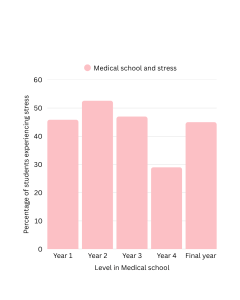
When we examine anxiety disorders, the picture becomes even more alarming. Research reveals that anxiety rates among medical students fluctuate dramatically throughout their education, creating a rollercoaster of psychological distress that tracks with the academic calendar. One comprehensive study found that anxiety affects 45.86% of first-year students, peaks at 52.58% in second year, remains elevated at 47.14% in third year, drops to 28.75% in fourth year, then rises again to 45.10% in the final year.

bar graph
Bar graph showing the percentage of students experiencing stress in different levels of medical school

These fluctuations tell a story of how different phases of medical education create unique psychological pressures. The initial shock of medical school intensity hits first-years hard, while second-year students face the notorious “pre-clinical to clinical” transition anxiety. Third-year students grapple with their first real patient responsibilities, fourth-years experience some relief as they near graduation, and final-year students face the stress of residency matching and career uncertainty.

The very individuals we’re training to heal others are experiencing mental health challenges at rates that would constitute a public health emergency in any other population.

The International Journal of Medical Education published a comprehensive meta-analysis in 2019 that examined 77 studies across different countries and cultures. The findings were consistent across geographic boundaries: medical students worldwide experience depression at rates 2.5 to 3 times higher than age-matched peers in other fields.

Why are so many medical students depressed?

The answer lies in a convergence of factors that create the perfect storm for mental health struggles. Medical students face a unique combination of extreme academic pressure, high-stakes testing, financial stress from significant debt, social isolation due to demanding schedules, and the psychological burden of preparing to hold lives in their hands.

Why do medical students have anxiety?

The anxiety epidemic stems from the uncertainty inherent in medical training. Students constantly face the unknown – will they pass their next exam? Will they match into their desired residency? Can they handle the responsibility of patient care? This chronic uncertainty, combined with perfectionist tendencies, creates persistent anxiety that can become debilitating.

Why are students more prone to depression?

Medical students are particularly vulnerable because they enter medical school as high achievers who have rarely experienced failure. When they encounter the normal struggles of medical education, they lack coping mechanisms for anything less than perfection. Additionally, the isolation from friends and family, financial pressures, and constant evaluation create a breeding ground for depressive symptoms.

What is the most stressful year of medical school? Based on anxiety data, second year emerges as the most psychologically challenging, with anxiety rates reaching 52.58%. This year combines intense studying for the first major licensing exam (USMLE Step 1) with the pressure of transitioning from basic sciences to clinical application – a combination that overwhelms more than half of all students.

Medical school attracts individuals who have spent their entire academic careers at the top of their class. These are students who have never encountered failure, who have built their identity around being the best, the brightest, the most capable. Then they enter medical school, where suddenly everyone is exceptionally talented.

Dr. Lisa Rotenstein, who has extensively researched medical student mental health, explains that this shift from being a big fish in a small pond to being surrounded by equally accomplished peers creates what psychologists call “the big fish-little pond effect.” For many students, this is their first encounter with academic struggle, and they lack the coping mechanisms to handle anything less than excellence.

The perfectionism that once served as a driving force becomes a destructive inner critic. Students begin to catastrophize normal academic challenges, viewing a single poor grade as evidence of their unworthiness to become a physician. This all-or-nothing thinking pattern, combined with the high stakes of medical education, creates a breeding ground for anxiety and depression.

The Imposter Syndrome Epidemic

“I don’t belong here.” “They made a mistake accepting me.” “Everyone else seems to understand this better than I do.” These thoughts plague medical students at alarming rates, creating what psychologists term “imposter syndrome” – the persistent feeling of being a fraud despite evidence of competence.

Medical education, with its emphasis on extensive knowledge and life-or-death decision-making, naturally amplifies these feelings. Students compare their internal struggles with their peers’ external composure, not realizing that everyone is fighting similar battles. The competitive atmosphere often discourages vulnerability and honest communication about difficulties, perpetuating the illusion that everyone else is managing better.

Maya, a third-year medical student, shared her experience: “I spent my first two years convinced that admissions had made an error. Every time I didn’t know an answer during rounds, I was sure my attending would realize I didn’t deserve to be there. It wasn’t until I started opening up to classmates that I realized we were all feeling the same way.”

Academic Pressure and the Stakes of Failure

Unlike other graduate programs, medical school carries the weight of future patient care. Students aren’t just worried about their GPA – they’re concerned that their academic performance directly correlates with their ability to save lives. This creates a unique psychological pressure that goes beyond normal academic stress.

The USMLE Step exams, residency applications, and clinical rotations all carry high stakes that can determine career trajectories. Students often report feeling that a single poor performance could derail their entire future, leading to chronic stress and anxiety that compounds over time.

Breaking the Stigma

Perhaps the most insidious aspect of this mental health crisis is the culture of silence that surrounds it. Medical students often fear that seeking help will be seen as weakness, that it will be documented in their records, or that it will prevent them from matching into competitive residencies.

This fear isn’t entirely unfounded. While progress has been made, some residency programs still ask about mental health history, and students worry about the implications of being honest about their struggles. The result is a culture where suffering in silence is normalized, where students push through depression and anxiety without seeking the help they desperately need.

Dr. Pamela Wible, a physician advocate for medical professionals’ mental health, describes this as “medical training trauma” – the normalization of abuse, neglect, and suffering as necessary components of becoming a physician. This toxic culture suggests that struggling with mental health indicates weakness or unsuitability for medicine, when in reality, it’s a natural human response to an unnaturally stressful environment.

Recognizing the Warning Signs

The tragedy of medical student mental health crises is that they’re often preventable with early recognition and intervention. Understanding the warning signs – both for oneself and for classmates – can be life-saving.

Physical symptoms often appear first: changes in sleep patterns, appetite fluctuations, frequent headaches, or unexplained fatigue. These may be dismissed as normal stress responses, but they often signal the beginning of more serious mental health challenges.

Cognitive changes include difficulty concentrating, memory problems, indecisiveness, or persistent negative thoughts. Students might notice that material that once came easily now feels impossible to grasp, or that they’re spending significantly more time studying with less retention.

Emotional indicators encompass feelings of hopelessness, excessive guilt, irritability, or emotional numbness. Some students report feeling like they’re “going through the motions” without experiencing genuine emotions.

Behavioral changes might include social withdrawal, neglecting self-care, increased substance use, or avoiding previously enjoyable activities. Students might stop exercising, eating poorly, or isolating themselves from friends and family.

Recognizing Signs in Classmates

Medical students often notice changes in their peers before recognizing them in themselves. Warning signs in classmates include dramatic changes in academic performance, increased absence from class or clinical rotations, social withdrawal, or comments about feeling hopeless or worthless.

The phrase “I’m just tired” becomes a common refrain that often masks deeper struggles. Students might joke about wanting to “disappear” or make offhand comments about not being cut out for medicine. These seemingly casual remarks often reflect genuine distress.

How Mental Health Impacts Medical Education

The consequences of untreated mental health issues extend far beyond individual suffering. Depression and anxiety significantly impact academic performance, with studies showing that medical students with untreated mental health conditions are more likely to struggle academically, drop out, or experience difficulties during clinical rotations.

More concerning is the impact on patient care. Students struggling with mental health issues report feeling less empathetic toward patients, making more medical errors, and experiencing greater difficulty with clinical decision-making. This creates a dangerous cycle where poor mental health leads to compromised patient care, which in turn increases guilt and worsens mental health symptoms.

The financial implications are also substantial. Medical education represents a significant investment, and mental health struggles can lead to academic delays, repeated coursework, or even withdrawal from medical school. The average medical student graduates with debt, making the consequences of mental health-related academic difficulties particularly devastating.

A Call for Change

Addressing the mental health crisis in medical education requires more than individual intervention. Medical schools are beginning to recognize this, implementing wellness curricula, providing mental health resources, and working to reduce stigma.

However, true change requires a fundamental shift in medical education culture. We must move away from the idea that suffering is necessary for becoming a good physician and toward a model that prioritizes well-being as essential for providing excellent patient care.

Students themselves play a crucial role in this cultural shift. By speaking openly about mental health struggles, supporting classmates, and prioritizing self-care, medical students can help create a more supportive environment for everyone.

The key is recognizing that seeking help for mental health struggles isn’t a sign of weakness – it’s a sign of strength and wisdom. Just as we wouldn’t expect someone to perform surgery with a broken hand, we shouldn’t expect students to navigate the challenges of medical education with untreated mental health conditions.

Resources and Next Steps

If you’re a medical student struggling with mental health issues, know that you’re not alone and that help is available. Most medical schools offer confidential counseling services, and many have specific programs designed for medical students.

Remember that seeking help early is always better than waiting until the situation becomes critical. Mental health treatment is not a luxury, it’s an essential component of your medical education and future practice.

Conclusion

The mental health crisis among medical students represents one of the most pressing challenges in medical education today. With depression rates three times higher than the general population, we can no longer afford to ignore this issue or dismiss it as a normal part of medical training.

By understanding the root causes – perfectionism, imposter syndrome, and overwhelming academic pressure – and recognizing the warning signs early, we can begin to address this crisis. More importantly, we can work to create a culture in medical education that values mental health as much as academic achievement.

If you’re struggling with mental health issues, please reach out for help. You deserve support, and seeking help makes you a better future physician, not a weaker one.

Sources:

  1. Rotenstein, L. S., et al. (2016). Prevalence of depression, depressive symptoms, and suicidal ideation among medical students. JAMA, 316(21), 2214-2236.
  2. Pacheco, J. P., et al. (2019). Mental health problems among medical students in Brazil. International Journal of Medical Education, 10, 224-230.
  3. Dyrbye, L. N., et al. (2014). Burnout and suicidal ideation among U.S. medical students. Annals of Internal Medicine, 149(5), 334-341.
  4. Mirza AA, Baig M, Beyari GM, Halawani MA, Mirza AA. Depression and Anxiety Among Medical Students: A Brief Overview. Adv Med Educ Pract. 2021 Apr 21;12:393-398. doi: 10.2147/AMEP.S302897. PMID: 33911913; PMCID: PMC8071692.

Everything They Don’t Tell You About Diabetes (But Should)

Over 537 million adults (20–79 years) were living with diabetes worldwide in 2021. That number is projected to rise to 643 million by 2030 and 783 million by 2045.

More adults are expected to be living with diabetes in 2045

Diabetes is one of the most common chronic conditions in the world today. It affects how your body turns food into energy. It happens when your blood sugar levels are too high because your body either doesn’t make enough insulin or can’t use it well. Insulin is a hormone that helps glucose from food get into your cells to be used for energy. When this process doesn’t work properly, sugar stays in your bloodstream. Over time, diabetes can lead to serious health issues.

What Is Diabetes?

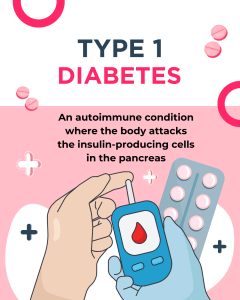
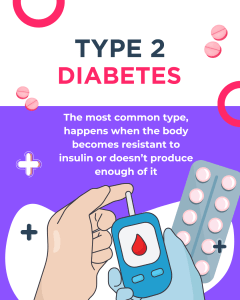
At its core, diabetes is a condition that affects how your body processes blood sugar (glucose). There are several types of diabetes. Type 1 diabetes is an autoimmune condition where the body attacks the insulin-producing cells in the pancreas. Type 2 diabetes, the most common type, happens when the body becomes resistant to insulin or doesn’t produce enough of it. Gestational diabetes occurs during pregnancy and usually goes away after childbirth, but it increases the risk of developing Type 2 diabetes later. Other,less common forms of diabetes can also occur due to genetic conditions, medications, or diseases of the pancreas.

Common Symptoms of Diabetes

Symptoms of diabetes can be subtle at first, especially with Type 2 diabetes. However, some early warning signs can help you catch it before complications arise. These include:

  • Frequent urination
  • Extreme thirst
  • Unexplained weight loss
  • Increased hunger

Other signs you might notice include darker patches of skin on the neck (a condition called acanthosis nigricans), recurring infections (especially urinary or skin), blurred vision, and even sexual dysfunction. Some people experience pain, tingling, or numbness in their hands or feet—this is a sign that diabetes may be affecting the nerves.

When Should You See a Doctor?

If you’re experiencing any of these symptoms—especially more than one—it’s a good idea to talk to a doctor. Even if you’re not showing obvious signs, routine screening is recommended if you’re over 45 or have risk factors such as being overweight, having a family history of diabetes, or living a sedentary lifestyle. Diabetes is diagnosed through blood tests like the A1C test, fasting blood sugar test, or an oral glucose tolerance test.

Understanding Risk Factors

Some risk factors for Type 2 diabetes are beyond your control, such as age, ethnicity, and family history. However, many risk factors are related to lifestyle, including physical inactivity, poor diet, high blood pressure, and excess weight—especially fat around the abdomen. Stress can also play a role, as chronic stress may raise blood sugar levels and make insulin resistance worse.

Living with Diabetes

Diabetes doesn’t just affect your blood sugar; it impacts nearly every part of your life. It can affect how you feel day to day, limit what you eat, and even cause emotional distress. But with the right knowledge and habits, many people with diabetes live long, active, and fulfilling lives. Managing diabetes means making smart food choices, staying physically active, monitoring your blood sugar levels, and sometimes taking medication or insulin.

Myths and Misconceptions

One of the most common myths is that eating too much sugar directly causes diabetes. While diet does play a role, it’s more about the overall pattern of eating, lifestyle, and genetics. Another myth is that only overweight people get diabetes—while weight is a risk factor, many people of normal weight also develop the condition. And no, diabetes is not contagious, and it can’t be cured with home remedies or “detoxes.”

Complications of Diabetes

If left untreated or poorly managed, diabetes can lead to serious complications. These include:

  • Heart disease
  • Kidney failure
  • Vision loss
  • Nerve damage
  • Limb amputations

The major problem with diabetes is not just high blood sugar, but the damage it can do quietly over time to major organs. This is why managing it well and catching it early is so important.

Prevention and Early Action

The good news is that Type 2 diabetes is often preventable. A healthy diet, regular physical activity, maintaining a healthy weight, and managing stress can go a long way in lowering your risk. If you’ve been told you have prediabetes—meaning your blood sugar is higher than normal but not high enough to be diabetes—it’s a sign to act now. Making small lifestyle changes can help you avoid full-blown diabetes and even reverse prediabetes.

Treating and Managing Diabetes

There’s no one-size-fits-all treatment, but diabetes can be managed effectively. This often involves a combination of medication, insulin (for some people), diet changes, and exercise. Some people can manage their diabetes without medication through lifestyle changes alone, especially if it’s caught early. Regular monitoring is key to staying in control.

Eating Right for Diabetes

A good diabetic diet focuses on whole foods like vegetables, lean proteins, whole grains, and healthy fats. Portion control and timing your meals can also help manage blood sugar levels. Foods to avoid or limit include sugary drinks, processed snacks, and refined carbohydrates. Working with a nutritionist can be incredibly helpful.

Stages and Progression

Diabetes doesn’t develop overnight. The four stages include insulin resistance, prediabetes, early Type 2 diabetes, and more advanced diabetes with complications. Knowing these stages can help you catch and manage the condition early, potentially avoiding the more serious effects altogether.

Conclusion

Diabetes is a serious condition, but it’s also manageable—and often preventable. With early detection, lifestyle changes, and the right medical support, you can take control of your health and live well. Don’t wait until symptoms become severe. If you’re at risk or experiencing signs, speak to a doctor. Your future self will thank you.


What to Expect During Clinical Rotations

woman holding sthesthoscope behind her

Clinical rotations are one of the most exciting and most intense phases of medical school. It’s the point where everything you’ve memorized in books starts coming to life in hospital corridors, patient rooms, and daily rounds. Download this FREE Checklist to make sure you have everything you need for your rotations.

Free Surgeons wearing masks and scrubs conduct an operation in a hospital setting. Stock Photo

The Ups of Clinical Rotation

You’ll finally have the chance to examine real patients, take histories, scrub in for procedures, and present cases to your group mates. From understanding how to document progress notes in electronic medical records to collaborating with nurses, residents, and attendings, your days will be packed with fast-paced, hands-on learning and team-based care.

You’ll also gain a ton of skills during this time. From mastering physical exams and suturing techniques to interpreting labs and imaging, your clinical abilities will grow quickly. Beyond the technical, you’ll also learn time management, communication, and professional behavior—things that no textbook can teach fully.

furthermore, you’ll learn how to think like a doctor, reason through diagnoses, and weigh treatment options in real time. You’ll start to find your voice, and you’ll realize how important it is to express your ideas with clarity and confidence—something Dr. Docherty touched on when he said in an interview for the AMA’s “What I Wish I Knew in Medical School” series:

“If I could do it again, I’d definitely be more forthright with my thoughts. I’d be more confident with how I spoke and really put my thoughts out there.”

The Downs of clinical Rotation

But let’s not sugarcoat it—rotations can be tough. Some days will drain you. Especially in demanding rotations like surgery, the long hours, emotional pressure, and performance evaluations can wear on you. 

The hierarchy can feel intimidating at first, and being evaluated constantly may cause you to doubt yourself. But know this: it gets better, and the key is to show up, stay curious, and never be afraid to say, “I don’t know, but I’ll find out.”

Free Portrait of a smiling female doctor in a white coat, exuding professionalism and confidence. Stock Photo

My First Clinical Rotation

Let me tell you about my own experience. My first clinical rotation was, in short, a nightmare. I had so much anxiety—not from patients, but from the idea that they might dislike me or treat me poorly. Ironically, the patients were the kindest part of that rotation. It was my classmates who made it hard. I found myself in a toxic group where I was shut out for reasons I still don’t understand. I’d walk into a room, and the whole group would walk out. It hurt me more than I’d like to admit. I always tell myself I don’t let things get to me, but that got to me. The strange part? It was cardiology—a rotation I genuinely loved. I still remember the first time I palpated a pulse. Fast forward to this year, and I actually saw a heart beating inside someone’s chest. Am I called for cardiology? Mmm, maybe.

Download this FREE Checklist to make sure you have everything you need for your rotations.

Other clinical rotations were much smoother. I learned how to manage my emotions better, navigate relationship conflicts, and even built meaningful connections with some of my groupmates. I attended numerous surgeries and felt genuinely excited to observe and try my hand at a few procedures.

What I Wish I Knew Earlier

One thing I wish I knew earlier is how important it is to forge relationships during rotations. Connecting with your residents, attendings, and even nurses makes a world of difference, not only for learning but for emotional support.

These relationships often lead to mentorships, letters of recommendation, and lifelong connections. Don’t isolate yourself, even when things get hard. You’re not just being evaluated on knowledge but also on how you function as part of a team.

Common Questions About Clinical Rotations

How do I prepare for my first clinical rotation?

Start by reviewing common conditions in that specialty. Brush up on how to take patient histories and perform physical exams. Set realistic goals and get plenty of rest beforehand. Most importantly, show up early and be ready to learn.

How hard are clinical rotations?

They can be very demanding, physically, mentally, and emotionally. But they’re also incredibly rewarding if you stay organized, take feedback well, and maintain a growth mindset.

How do I survive a clinical rotation?

Time management is key. Take care of your health, ask for help when needed, and don’t compare yourself to others. Focus on progress, not perfection.

What should I expect on my first day?

Expect early starts, introductions, and a general feeling of “Where do I belong here?” You’ll probably shadow your team, meet patients, and observe more than you do.

How should I dress?

Professional attire is a must. Think: clean white coat, scrubs or business-casual (depending on the department), and closed-toe shoes. Keep it simple and neat.

How do I do well in clinical rotations?

Be curious, helpful, respectful, and proactive. Study the cases you see. Ask intelligent questions. Seek feedback and apply it.

How long do clinical rotations take?

Typically, each rotation lasts 4–12 weeks depending on your curriculum and the specialty.

What do clinical rotations look like?

They usually include morning rounds, patient care, procedures, lectures, and sometimes night shifts or call duties.

Do you put clinical rotations on your resume?

Yes, especially if you’re applying for residencies or jobs that value specific experiences.

What is the purpose of clinical rotations?

To give you real-world exposure to patient care, help you apply classroom knowledge, and guide you in choosing a specialty.

How do you list rotations on a CV?

List the specialty, hospital name, dates, and notable experiences or procedures observed/performed.

What is an example of a clinical experience?

“Completed an 8-week Internal Medicine rotation at XYZ Hospital, managing patient care under supervision, interpreting labs, and presenting cases during rounds.”

Download this FREE Checklist to make sure you have everything you need for your rotations.

Conclusion

Clinical rotations are where you evolve from a student into a future doctor. They will test your knowledge, shake your confidence, and stretch your limits, but they will also ignite your passion, sharpen your skills, and help you find your place in medicine.

Did you find this blog interesting? Leave a comment below.