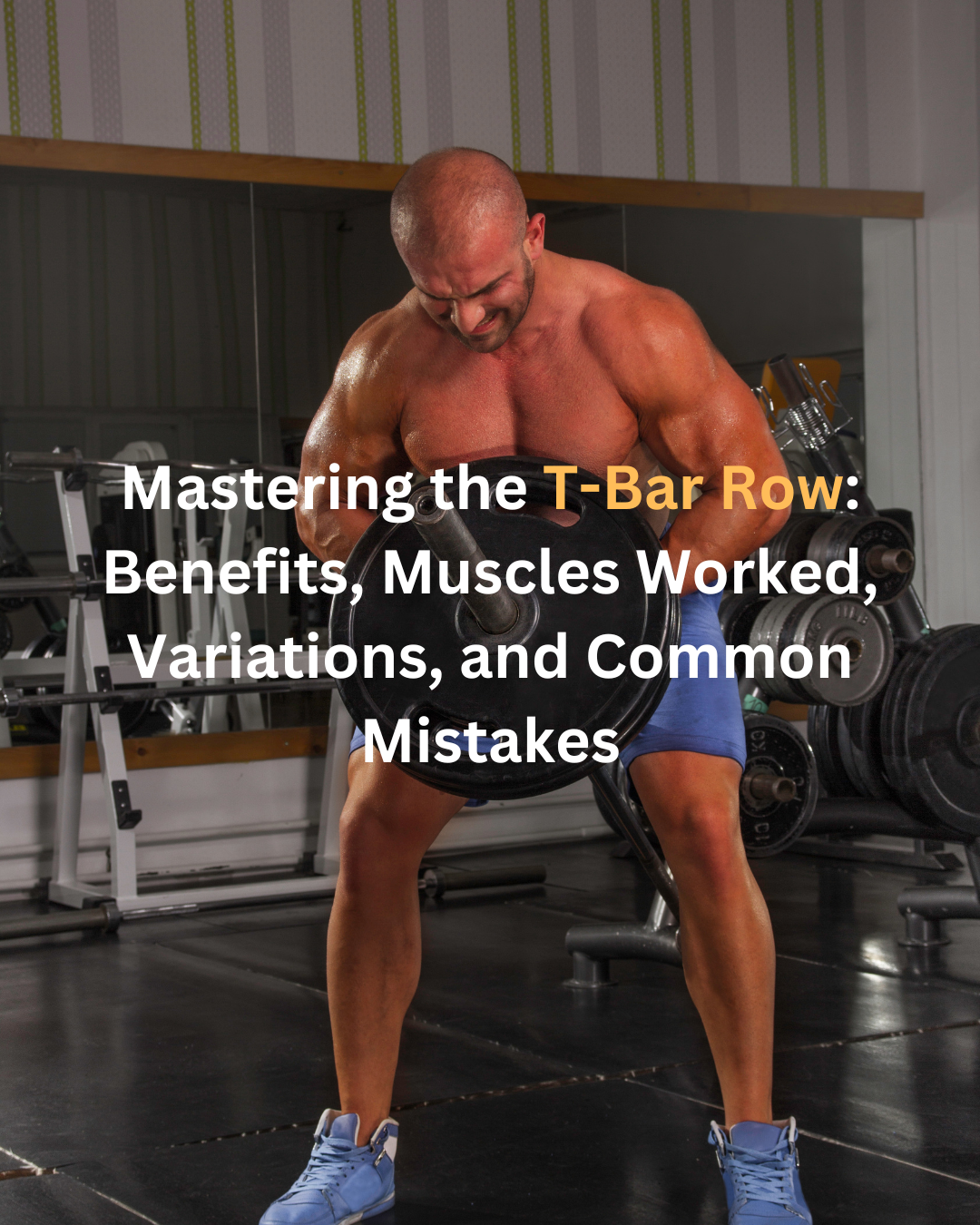

Few exercises are as practical as the T-bar row when building a strong, thick back. This staple in many gym routines delivers a powerful workout that focuses on back development, but it’s so much more than just a back exercise.
In this blog, we’ll explore everything you need to know about the T-bar row, including its benefits, how to do it, common mistakes, and some effective variations to keep your workouts fresh and exciting.
What Does the T-Bar Row Machine Work?
The T-bar row machine primarily targets your back muscles, focusing on the middle and upper back, including the latissimus dorsi, trapezius, and rhomboids. It also engages secondary muscles like the biceps, rear deltoids, and coreto stabilize your body during the motion.
The result? A thicker, more robust back, improved posture, and a better foundation for other pulling exercises, such as pull-ups and deadlifts.
What Does the T-Bar Press Work?
The T-bar press is a less common variation of the traditional T-bar row. This press targets your shoulders, chest, and triceps rather than the back. Instead of rowing the weight toward your body, you’re pressing it upward like an overhead press. This makes it a fantastic compound movement for building upper body strength and can complement your back-focused workouts.
How to Perform the T-Bar Row
The T-bar row is relatively simple to perform but requires good form to get the most out of it and prevent injury. Here’s a step-by-step breakdown:
- Place a barbell in a landmine attachment or secure one end of the barbell into a corner.
- Stand over the barbell and grab the T-bar handle or V-handle attachment.
- Slightly bend your knees, hinge forward at the hips, and keep your back straight with your chest up.
- Drive your elbows back while squeezing your shoulder blades together, pulling the bar toward your chest.
- Slowly lower the bar back to the starting position, allowing your arms to extend fully.
Pro tip
Your lower back should remain wholly fixed during the movement. The only part of your body that should move is your arms. Keep your shoulders relaxed at the bottom and tighten them at the top for maximum effectiveness.
Is the T-Bar Row Good for Your Back?
Yes, the T-bar row is excellent for your back! It’s one of the best exercises for targeting the middle and upper back, creating a thick, muscular look. It emphasizes back muscle hypertrophy while improving overall pulling strength, which is essential for functional fitness.
Additionally, because the movement requires a straight back and tight core, the T-bar row helps strengthen your lower back as well, offering a complete back workout.
What Muscles Does the T-Bar Row Target?
The primary muscles targeted by the T-bar row include:
- Latissimus Dorsi (Lats): The large muscles on the sides of your back that contribute to width.
- Trapezius: The upper back muscles that extend from your neck to your shoulders.
- Rhomboids: Located between your shoulder blades, responsible for retraction and squeezing during the row.
Secondary muscles:
- Biceps: Assist in pulling the bar.
- Rear Deltoids: Located on the back of your shoulders.
- Core: Engaged to maintain balance and posture.
Is the T-Bar Row Effective?
Absolutely! The T-bar row is highly effective for back development and can help improve posture, back strength, and overall physique. It’s a compound movement that engages multiple muscle groups, making it an efficient exercise for building upper body strength.
Is the T-Bar Row for the Middle Back?
The T-bar row is particularly effective for targeting the middle back, especially the trapezius and rhomboid muscles. By adjusting your grip (narrow or wide), you can slightly alter the emphasis on different parts of your back.
Why Does My Lower Back Hurt When I Do T-Bar Rows?
If your lower back hurts during T-bar rows, it’s usually a sign that your form is off. Here are some common mistakes:
- Rounding your back
- Leaning too far forward
- Lifting too heavy
To avoid injury, brace your core, keep your back straight, and use an appropriate weight.
How Heavy Should the T-Bar Row Be?
The weight for the T-bar row will vary depending on your fitness level. As a general rule:
- Start with a lighter weight to master your form.
- Once comfortable, aim for a weight that challenges you for 8–12 reps.
- Avoid going too heavy, as this can compromise your form and increase the risk of lower back strain.
Remember, quality over quantity. It’s better to lift a moderate weight with perfect form than to go too heavy and risk injury.
How to Use the T-Bar Machine
The T-bar machine simplifies the movement, offering more stability than a free-weight setup. Here’s how to use it:
- Adjust the chest pad to fit your height.
- Position your feet firmly on the platform and grab the handles.
- Lean forward slightly, maintaining a neutral spine.
- Pull the handles toward your chest, squeezing your shoulder blades together.
- Lower the weight back down with control.
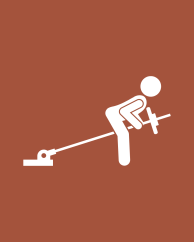
The T-bar machine offers a safer, more controlled way to perform the exercise, which can be helpful if you’re recovering from an injury or new to rowing movements.
What Are the Disadvantages of the T-Bar Row?
While the T-bar row is a great exercise, it does have a few potential drawbacks:
- Lower back strain
- Limited range of motion
- Requires equipment
Is the T-Bar Row Better Than Pull-Ups?
Both T-bar rows and pull-ups are practical exercises, but they target the back in slightly different ways.
Pull-ups focus more on width, targeting the lats to give that “V-taper” look.
T-bar rows emphasize thickness, particularly in the middle and upper back.
Neither exercise is necessarily “better,” but incorporating both into your routine can provide a more comprehensive back workout.
11 Effective Alternative for T-Bar Row Exercises
- Wide-Grip T-Bar Row: Targets the upper back and traps.
- Underhand Grip T-Bar Row: Emphasizes the lower lats and biceps.
- Single-Arm T-Bar Row: Allows deeper stretch and unilateral strength.
- Gorilla Row: Combines a squat position with the T-bar movement.
- Pendlay Row: A more explosive row with the bar resting on the ground between reps.
- Seal Row: Performed lying flat on a bench, which eliminates lower back strain.
- Inverted Row: A bodyweight alternative that’s great for beginners.
- Cable Row: Simulates the T-bar movement with more stability.
- Dumbbell Row: A free-weight alternative for added flexibility.
- Landmine Row: A variation using the landmine attachment without a handle.
- Chest-Supported T-Bar Row: Reduces strain on the lower back by supporting your chest.
Common T-Bar Row Mistakes
To get the most out of the T-bar row, avoid these common mistakes:
1. Always maintain a slight knee bend for balance and support.
2. Keep your back straight and avoid rounding your shoulders.
3. Focus on using your back muscles, not your arms.
4. You should hinge at the hips, not the waist.
5. Large plates can restrict your range of motion. Opt for smaller plates if needed.
Conclusion
The T-bar row is a fantastic exercise for building a strong, thick back, but it’s essential to maintain proper form and gradually increase weight. You can get the most out of this powerhouse move by incorporating variations and avoiding common mistakes.
So, grab that bar, tighten up your core, and row your way to a bigger, stronger back!
Did you find this article interesting, leave a comment below.

 MABS
MABS 