
Sleep is non-negotiable. Treat sleep as an essential part of your health and productivity, not an optional activity. We have compiled the best secrets to have the best sleep.
1. Stick to a Consistent Sleep Schedule
Go to bed and wake up simultaneously every day, even on weekends. Consistency reinforces your body’s natural sleep-wake cycle. You can do this by choosing a bedtime and wake-up time that allows for 7-9 hours of sleep.
2. Create a Relaxing Bedtime Routine

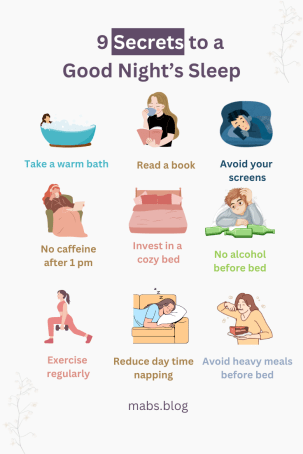
Develop a calming pre-sleep ritual like reading, praying, meditating, or taking a warm bath to signal to your body that it’s time to wind down. During this time, avoid social media.
You can also use the time to reflect on your day by journaling and writing about what you look forward to tomorrow.
3. Limit Blue Light Exposure
Avoid screens (phones, TVs, computers) at least an hour before bed. Blue light can interfere with melatonin production, which is essential for sleep.
Just avoid social media and keep your phone at a distance.
4. Keep Your Room Dark and Cool
A dark, cool bedroom (around 60-67°F or 15-19°C) promotes better sleep by mimicking natural nighttime conditions.
Switch off all the lights, but if you do not like sleeping in total darkness, you can switch on a little night light, not too bright.
5. Invest in Comfortable Bedding

Use a supportive mattress, soft pillows, and breathable sheets to create a cozy sleep environment. You always have your bed made in the morning so you can slip into a clean bed at night.
6. Avoid Caffeine Late in the Day

Caffeine can stay in your system for up to 8 hours. Avoid consuming coffee, tea, or energy drinks after mid-afternoon. Stop your coffee after 1 pm so you can be caffeine-free by bedtime.
7. Limit Alcohol Before Bed

Though alcohol can make you feel drowsy, it disrupts sleep patterns and reduces sleep quality. It is good sleep hygiene to avoid alcohol before bed.
8. Exercise Regularly

Physical activity improves sleep, but avoid vigorous exercise too close to bedtime, as it can keep you awake. This means avoiding going to the gym too close to bedtime. Instead, go to the gym in the morning or around 2 pm—6 pm.
What’s most important is that you work out; don’t do it too close to bedtime.
9. Limit Daytime Naps
If you need to nap, keep it to 20-30 minutes in the early afternoon to avoid disrupting nighttime sleep. You can schedule your nap anytime between 12–3 pm, but only for 30 minutes max.
10. Manage Stress and Anxiety
Practice relaxation techniques such as deep breathing, journaling, or mindfulness to calm your mind before bed. On days when you have been too tested, you can enjoy a good crying session before bed. Studies have found melatonin in tears. Melatonin is the night hormone regulated by the circadian rhythm that helps with sleep.
11. Avoid Heavy Meals Before Bedtime

After a long day, you might be tempted to reward yourself with an extra bowl of pasta or another slice of cake. However, eating large or spicy meals too close to bedtime can cause discomfort and disrupt sleep.
12. Limit Fluid Intake Before Bed
Reduce drinking liquids an hour or two before bed to minimize nighttime trips to the bathroom. If you go to the bathroom multiple times in the night, it might be time to see your caregiver.
13. Use White Noise or Calming Sounds
Soothing sounds, like white noise or soft music, can help drown out distractions and lull you to sleep. You can also consider playing soothing gospel music as you sleep to set an atmosphere of worship as you sleep.
14. Optimize Lighting Throughout the Day
Get plenty of natural light during the day to regulate your circadian rhythm and signal your body to stay awake when it’s light out. You can also reduce using artificial light during the day and night; try following natural light as much as possible.
15. Avoid Sleeping Pills
Unless prescribed by a doctor, avoid over-the-counter sleep aids, which can lead to dependency or interfere with natural sleep cycles.
16. Practice Gratitude

Spend a few minutes reflecting on what you’re thankful for. A positive mindset can help you relax and sleep better.
17. Use Aromatherapy
Scents like lavender, chamomile, or sandalwood can help promote relaxation and improve sleep quality.
18. Reserve Your Bed for Sleep
Avoid working, watching TV, or eating in bed. This helps your brain associate your bed with rest and sleep only.
19. Try Progressive Muscle Relaxation
To release tension, systematically tense and relax each muscle group in your body, starting from your toes and working upward.
20. Seek Professional Help if Needed
If you consistently struggle with sleep, consult a doctor or sleep specialist. Sleep disorders like insomnia or sleep apnea require treatment.
Conclusion
Adopting even a few of these habits can significantly improve the quality of your sleep. Sweet dreams.
Did you find this article helpful? Leave a comment below.

 MABS
MABS 
Great post. #17… my wife buys this lavender spritz thing we mist our pillows with just before we turn out the lights. Great stuff 😎
LikeLike
Wow, she knows that lavender helps her family sleep well at night 🌸
LikeLike